



BNIP3
BNIP3 (BCL2/adenovirus E1B 19 kDa-interacting protein 3) is a hypoxia-responsive mitochondrial protein within the BH3-only-like subgroup of the BCL2 family that regulates both programmed cell death and selective autophagy, making it a central mediator of cellular stress adaptation[1][2]. Mechanistically, BNIP3 is transcriptionally induced by HIF-1α under hypoxic conditions and promotes mitochondrial quality control through mitophagy by facilitating the clearance of damaged mitochondria and limiting reactive oxygen species accumulation[3][4][5]. Through this HIF-1α/BNIP3 signaling axis, BNIP3 coordinates mitochondrial turnover, apoptosis regulation, and metabolic adaptation in hypoxic tissues and tumor microenvironments[3][5][6]. In disease models, BNIP3-mediated mitophagy has been linked to protection against ischemia-reperfusion injury in renal tubular cells through suppression of oxidative stress and apoptosis, while dysregulated BNIP3 expression has also been associated with cancer progression, cardiac dysfunction, and hypoxia-associated tissue injury[5][1][7]. Compared with the related isoform BNIP3L/NIX, which is required for erythroid mitochondrial clearance, BNIP3 is more prominently associated with hypoxia-driven mitophagy and mitochondrial stress responses in multiple cell types[1][8]. Experimental studies further demonstrate that BNIP3 can trigger either mitophagy or cell death depending on cellular context, highlighting its utility as a mechanistic target for investigating mitochondrial quality control, hypoxia signaling, and stress-induced cellular remodeling[2][6][9].
References:
- [1]. Zhang J, et al. Role of BNIP3 and NIX in cell death, autophagy, and mitophagy. Cell Death Differ. 2009 Jul;16(7):939-46. [Content Brief]
- [2]. Wheeler DL, et al. Mechanisms of acquired resistance to cetuximab: role of HER (ErbB) family members. Oncogene. 2008 Jun 26;27(28):3944-56. [Content Brief]
- [3]. Band M, et al. Hypoxia-induced BNIP3 expression and mitophagy: in vivo comparison of the rat and the hypoxia-tolerant mole rat, Spalax ehrenbergi. FASEB J. 2009 Jul;23(7):2327-35. [Content Brief]
- [4]. He YL, et al. BNIP3 phosphorylation by JNK1/2 promotes mitophagy via enhancing its stability under hypoxia. Cell Death Dis. 2022 Nov 17;13(11):966. [Content Brief]
- [5]. Mellor HR, et al. The role of the hypoxia-inducible BH3-only proteins BNIP3 and BNIP3L in cancer. Cancer Metastasis Rev. 2007 Dec;26(3-4):553-66. [Content Brief]
- [6]. Li Y, et al. Methylation of BNIP3 in pancreatic cancer inhibits the induction of mitochondrial-mediated tumor cell apoptosis. Oncotarget. 2017 Jun 28;8(38):63208-63222. [Content Brief]
- [7]. Yang H, et al. Comparison of three-dimensional conformal radiation therapy, intensity-modulated radiation therapy, and volumetric-modulated arc therapy in the treatment of cervical esophageal carcinoma. Dis Esophagus. 2017 Feb 1;30(2):1-8. [Content Brief]
All Product Categories
-
BNIP3 Related Products (1)
Related Products (1)

-
RU28362
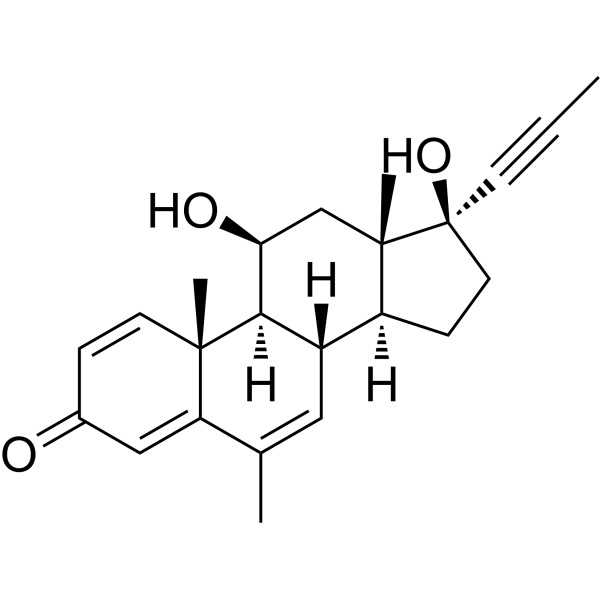 0 ImagesCat. No.: HY-121859CAS No.: 74915-64-3RU28362 is a potent and selective glucocorticoid agonist. RU28362 increases the Bnip3 mRNA levels in neurons. RU28362 inhibits adrenocorticotrophic hormone (ACTH) and corticosterone secretion. RU28362 is a click chemistry reagent, it contains an Alkyne group and can undergo copper-catalyzed azide-alkyne cycloaddition (CuAAc) with molecules containing Azide groups.



